
Shopping Cart
There are no more items in your cart
.jpg)

.jpg)





.jpg)
.jpg)
HORMONES AND MINOXIDIL FOR EYELASH GROWTH: WHY TO AVOID THEM AND WHAT TO USE INSTEAD

Longer, fuller and more defined lashes: who wouldn't want them? Lately, social media has been flooded with tips on how to get them fast, and among the most talked-about DIY remedies are hormonal serums, prostaglandins and even minoxidil — the same product used to treat hair loss.
The problem is that nobody talks clearly enough about the risks. These products are not formulated for the periocular area, have not been tested on lashes and can cause serious side effects.
You're in the right place if you want to understand what's really behind these trends, why it's better to keep them away from your eyes and most importantly what safe and effective alternatives exist to take care of your lashes every day.
In this article you'll find everything you need to know: from the real risks of minoxidil and hormonal serums, to the nutrients that support hair growth, through to professional treatments specifically designed to nourish and strengthen lashes safely.
Why minoxidil is not the solution for your lashes
Minoxidil is an active ingredient with medical origins, initially developed as a drug for high blood pressure and later approved in topical form for the treatment of hair loss. It works by stimulating blood circulation in the hair follicles, extending the hair growth phase. It has existed for decades, regulated and sold in pharmacies, but always and only for one specific use: the scalp.
In recent years, various content creators have started showing minoxidil being applied to lashes as if it were just another beauty trick. But there is one aspect these videos almost never show: the periocular area, meaning the skin around the eyes, is one of the thinnest and most delicate areas of the entire body. It absorbs substances much more rapidly than other skin areas, which means that any product applied there enters the bloodstream more intensely and less predictably. Applying minoxidil near the eyes therefore exposes you to real risks: irritation, redness, eyelid swelling and hypertrichosis, meaning the appearance of unwanted hair in nearby areas such as the cheekbones and temples.
From a regulatory standpoint, the matter is clear. Minoxidil is not approved for cosmetic use on eyelashes. The European Cosmetics Regulation sets precise safety criteria for products intended for the periocular area, and minoxidil is not among the permitted ingredients for this type of use. Using it on lashes therefore means applying a drug outside its approved indications, with no safety guarantee for that specific area.
Minoxidil may seem like a tempting shortcut, but the risks far outweigh the benefits — especially when professional alternatives exist that are specifically designed to nourish and strengthen lashes safely.
Prostaglandin and hormonal serums: the dark side of viral products
Prostaglandins are hormone-like substances naturally present in our body that regulate various biological processes including the hair growth cycle. Some eyelash serums contain synthetic prostaglandin analogues — substances that mimic their effect — with the aim of extending the hair growth phase and achieving longer, fuller lashes.
The reason these products seem to work, at least initially, is precisely this: by acting on the biological cycle of the hair they manage to produce visible results in the short term. And this is where their appeal lies — and also their trap. The hair grows, results are visible, and everything seems fine. What is almost never mentioned is what happens next.
When you stop using these serums, the hair cycle tends to return to its natural phase. Many people who have used them for a long time report more noticeable shedding than usual and lashes that appear thinner than before they started the treatment. In practice, the hair had become accustomed to an external stimulus and without it struggles to maintain the growth rate it had achieved.
On top of this there is a fundamental problem: many of these serums are sold as cosmetic products but contain active ingredients with a genuine pharmacological action. In Europe, the Cosmetics Regulation prohibits the use of pharmacologically active substances in cosmetics. This means that some of these products exist in a regulatory grey area, often imported from non-European markets where controls are different.
The simplest rule to follow remains this: if a product promises extraordinary results in a short time by acting on the biology of your hair, it's worth asking yourself how it actually does that — and at what cost.
So what really strengthens lashes?
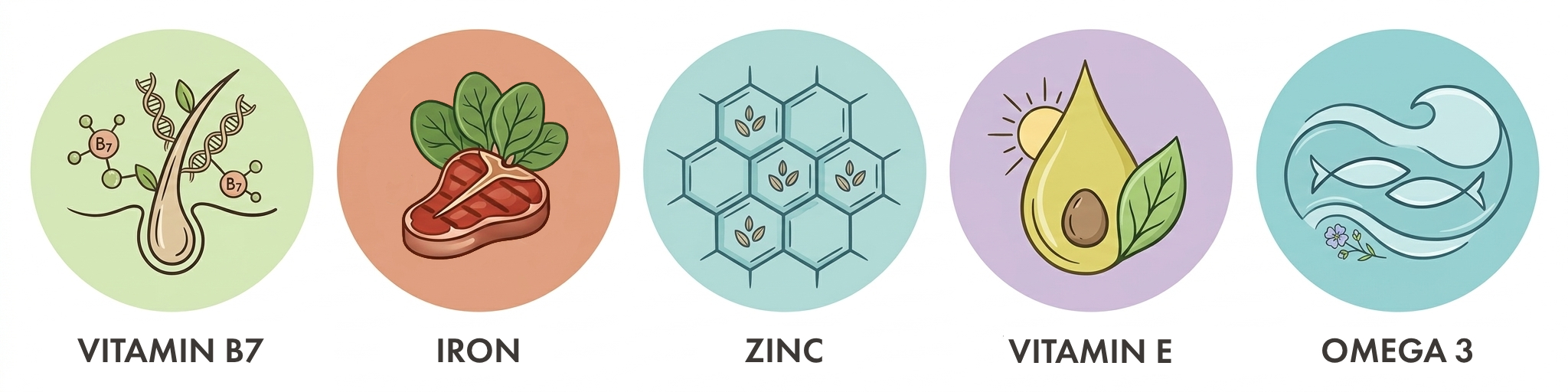
From a nutritional standpoint, there are some nutrients that make a real difference. Biotin, also known as vitamin B7, is perhaps the most well-known when it comes to the health of hair and lashes: it supports the production of keratin, the structural protein of the hair. You can find it in eggs, nuts, salmon and legumes.
Iron is equally important — a deficiency is often the first cause of hair loss and weakening — and is found in red meat, spinach and legumes.
Zinc supports tissue repair and cell growth, and is present in pumpkin seeds, meat and wholegrain cereals.
Vitamin E protects follicles from oxidative stress and is abundant in extra virgin olive oil, almonds and avocado.
Finally, omega 3, found in oily fish, walnuts and flaxseeds, nourishes the hair follicle from within keeping it hydrated and vital.
Hydration also plays an often underestimated role — drinking enough water throughout the day is one of those simple gestures that over time produces concrete effects on lash health too.
Daily habits also matter a great deal. Frequently rubbing your eyes, for example, is one of the most damaging habits for lashes: constantly exerting pressure on the follicle can weaken it over time and accelerate shedding. Waterproof mascara, if used every day, also tends to dry out and make the hair brittle due to the ingredients needed to make it water-resistant. Removing makeup aggressively — rubbing instead of gently pressing — has the same effect.
| Method | Safe | Effective | EU Approved | Long-lasting Results |
|---|---|---|---|---|
| Minoxidil | No | No | No | No |
| Hormonal serums | No | No | No | No |
| Castor oil | Yes | Partially | Yes | No |
| Peptide-based serums | Yes | Yes | Yes | Yes |
Safe and professional eyelash serums
While hormones and minoxidil work by forcing a biological process in an uncontrolled way, professional serums work completely differently. Instead of pharmacological substances, they use peptides — chains of amino acids that work in synergy with the natural structure of the hair, nourishing it from within and supporting its growth cycle in a physiological and safe way.
The BOTOX HYALURONIC Lash & Brow Serum by Kalentin is a serum designed exactly for this purpose: to strengthen and nourish lashes over time, without interfering with hormonal balance and without creating dependency. It is ophthalmologically tested, registered with the European cosmetic portal CPNP, and certified Vegan and Cruelty-Free.
Results don't come overnight, but they are real and long-lasting. And most importantly, when you stop using them your lashes don't get worse — they simply return to their natural state.
If you want to understand in detail how peptides work and why they make a difference compared to DIY remedies, we recommend reading our article "CASTOR OIL OR PROFESSIONAL LASH SERUM? THE TRUTH REVEALED".
FAQ: Kalentin answers
What makes eyelashes grow longer?
There is no solution that lengthens lashes overnight, but there are habits and products that make a real difference over time. A routine that includes a good diet rich in biotin, iron and omega 3, gentle makeup removal and the regular use of a peptide-based serum are the most effective and safe tools to support natural lash growth.
Do fallen eyelashes grow back?
Yes, eyelashes grow back naturally. Like all hairs, lashes follow a precise biological cycle of growth, transition and rest, and physiological shedding is completely normal. On average, each lash is replaced every four to six weeks.
Does castor oil make eyelashes grow?
There are no scientific studies that definitively prove castor oil directly stimulates hair growth. What it can do is act as a surface emollient: it hydrates and softens the lash.
The right path to healthier, fuller lashes
Hormones, minoxidil, prostaglandin serums: we've seen why these products, however viral and tempting, are absolutely not the right choice for your lashes. Results are temporary and side effects can be serious and difficult to manage.
There are safe and effective alternatives. Start with the basics: a consistent daily routine, a good diet and a little extra care in how you look after your lashes every day. These are simple gestures that make a real difference over time. If you're unsure which product is best suited to your needs, ask your trusted beauty therapist: she'll guide you towards the right solution for your lash structure and condition.
The next step is to complement your routine with a professional serum specifically formulated to nourish and support lash growth safely. Discover the Kalentin Botox Serum designed to take care of your lashes every day, with no compromises on health.